
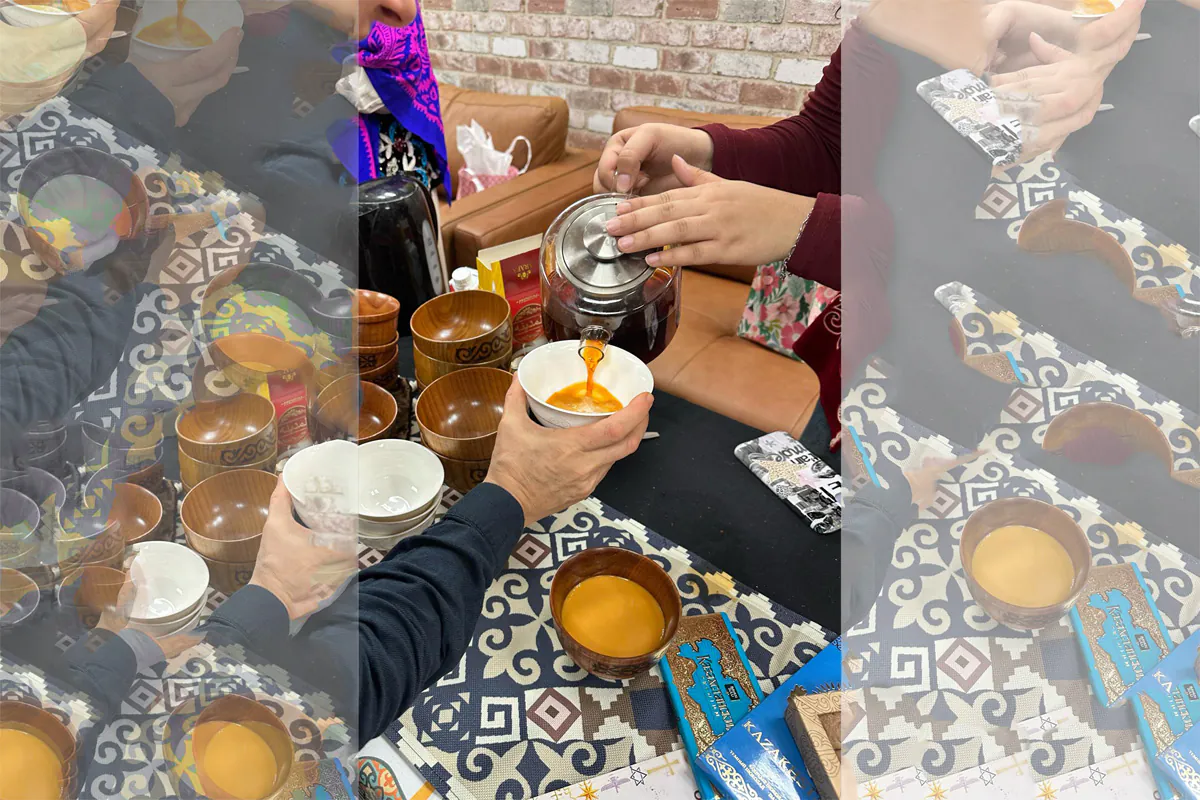
Last Saturday night (January 24, 2026), our Coffee Night at Pacifica Institute became a warm cultural exchange built around something simple and universal: tea.
Participants introduced tea traditions from Algeria, Kazakhstan, Turkmenistan, Türkiye, Azerbaijan, and Ethiopia—sharing not only flavors, but also the stories behind them: how each tea is brewed, what it represents in family life, the cups used to serve it, and the etiquette and gestures that turn a drink into a message of hospitality.
What made each tea special (and what goes in the cup)
-
Algeria (Maghrebi mint tea): commonly prepared with green tea, fresh mint, and plenty of sugar. A beautiful tradition across the Maghreb is pouring tea from high above the glass, which aerates the tea and creates a light foam—often described as part of the ceremony of welcome and respect.
-
Kazakhstan: tea is a centerpiece of hospitality, often enjoyed with accompaniments, and, in many homes, milk is a familiar addition.
-
Turkmenistan: green tea (often called gök chai) is widely described as a staple in daily life and hospitality.
-
Türkiye: we highlighted the famous çaydanlık (two-tier teapot) method. The tea brews in the upper pot using indirect heat from the boiling water below—helping the leaves steep without scorching, which can make tea taste harsh or bitter.
-
Azerbaijan: tea is often served in the iconic armudu (pear-shaped) glass, and it’s commonly paired with lemon, sugar, sweets, and even jams/preserves on the side.
-
Ethiopia: participants also shared a spiced-tea style that can include warming ingredients such as cinnamon, cloves, cardamom, ginger, and honey for sweetness.
Fun etiquette facts we learned
-
The “high pour” tradition in Maghrebi mint tea culture is widely noted for its foam/aeration—and is commonly described as a gesture of welcome and respect.
-
In Central Asian tea etiquette, serving tea not completely full can signal respect and encourage frequent refills, while a cup filled to the brim can signal it’s time to wrap up the visit.
-
In Azerbaijan, tea can even “speak” during matchmaking: sweetened tea can signal things are going well, while unsweetened tea may signal reluctance.
A sweet addition at the end
To close the night, we also served two well-loved Japanese favorites: mugicha (roasted barley tea) and shōgayu (Japanese ginger tea, often enjoyed with honey)—a cozy finish to a truly global table.
Thank you to everyone who presented, participated, and made space for learning and friendship. Nights like this remind us: sometimes the best cultural exchange starts with, “Would you like some tea?”


