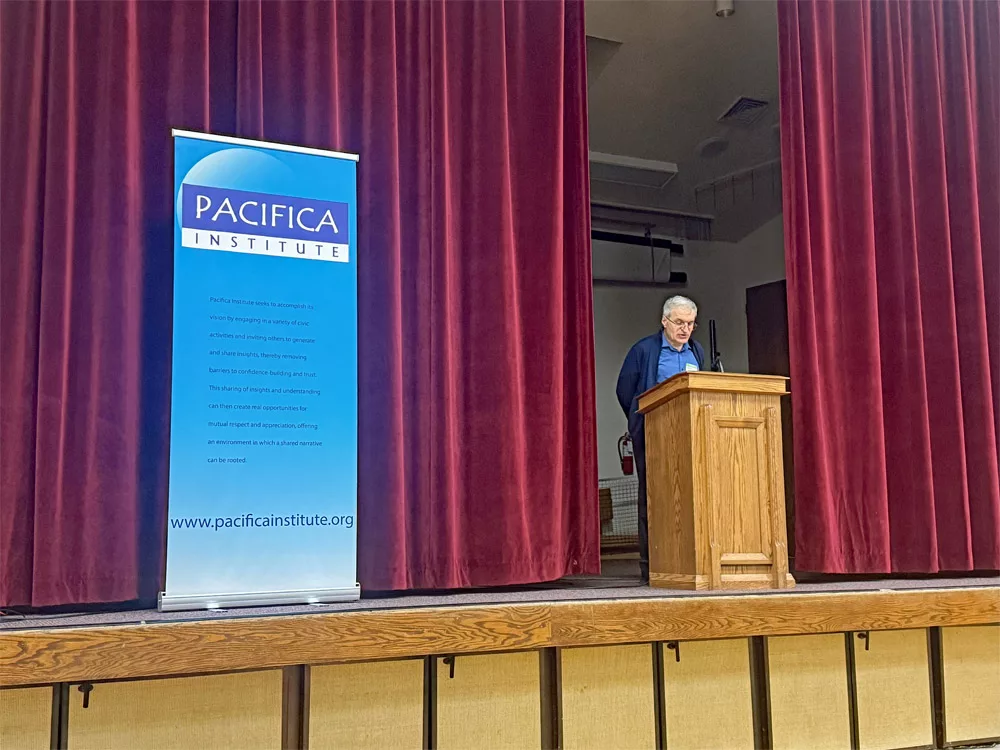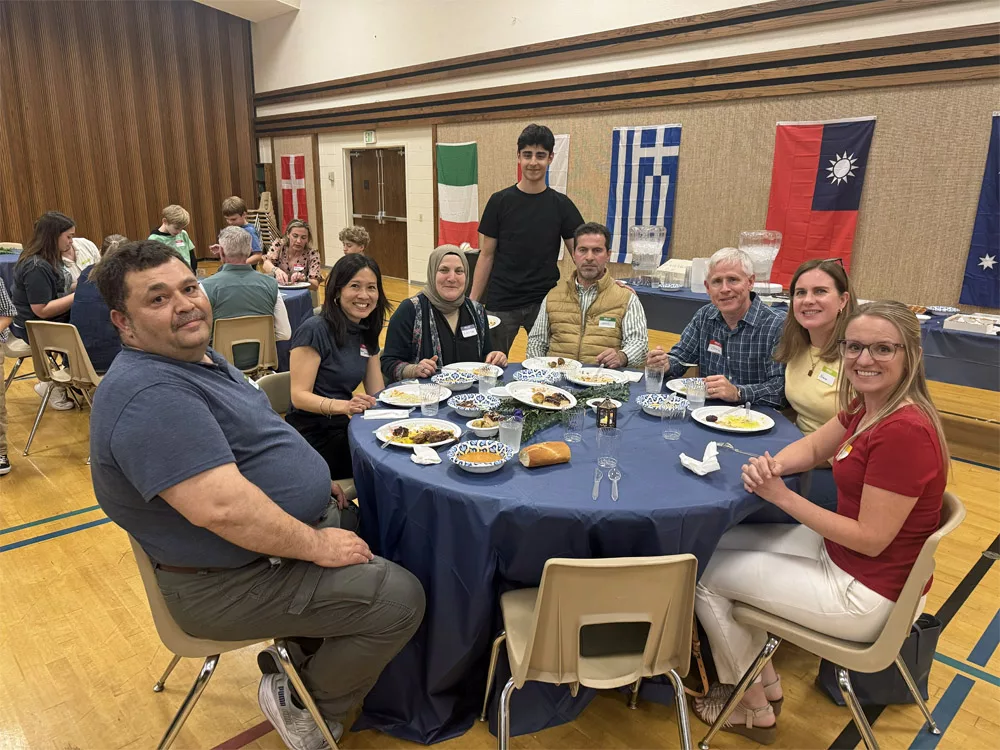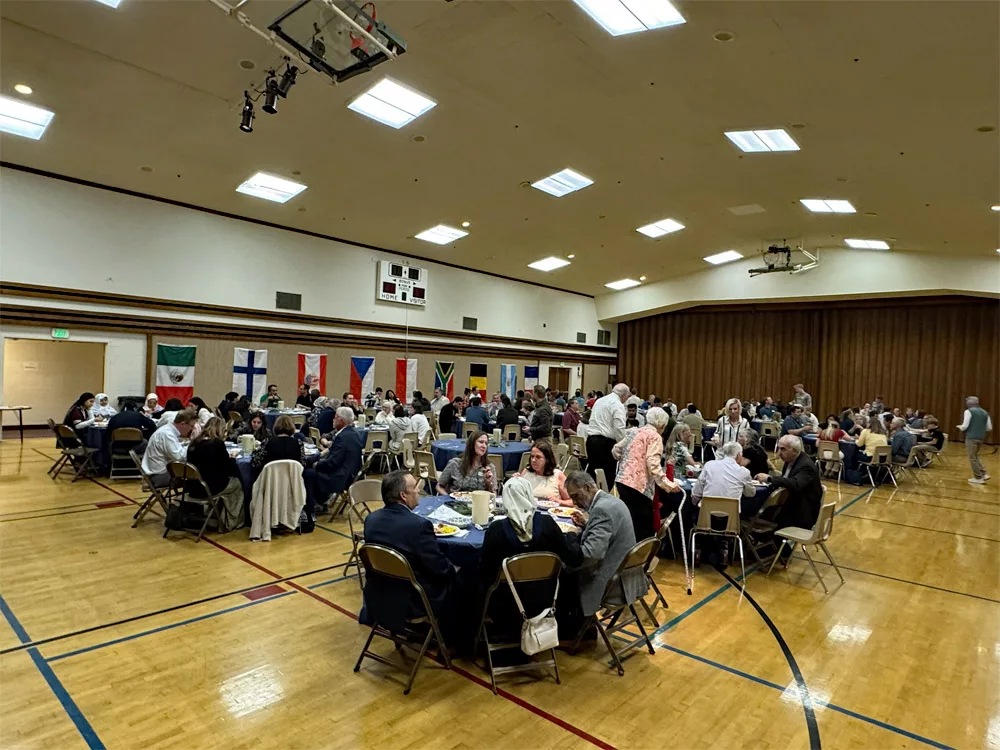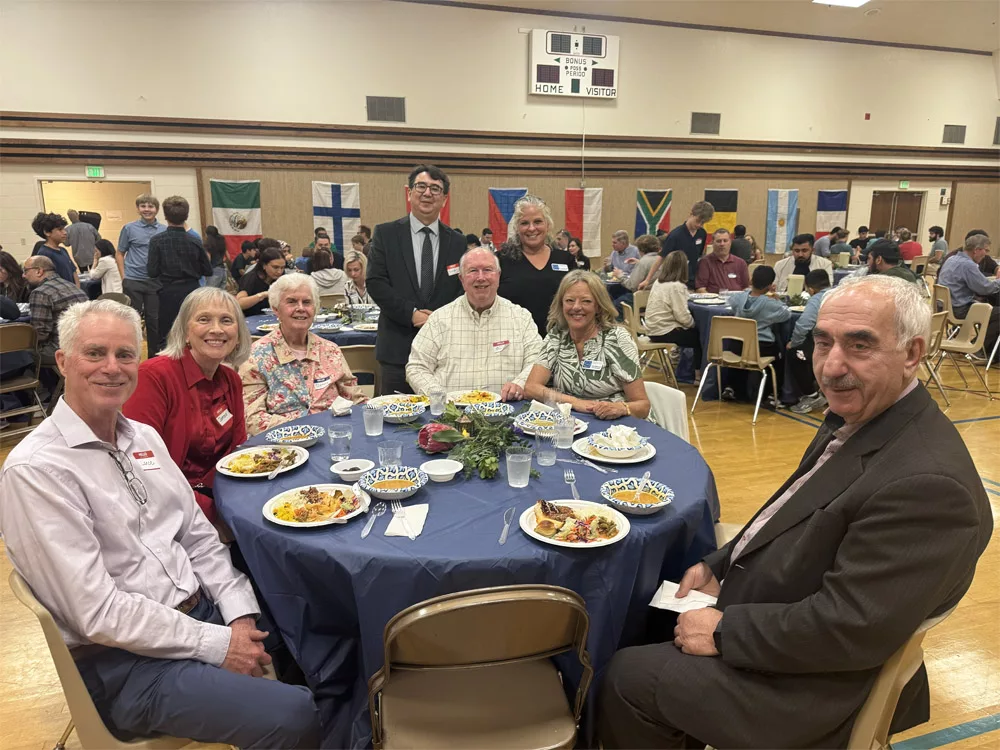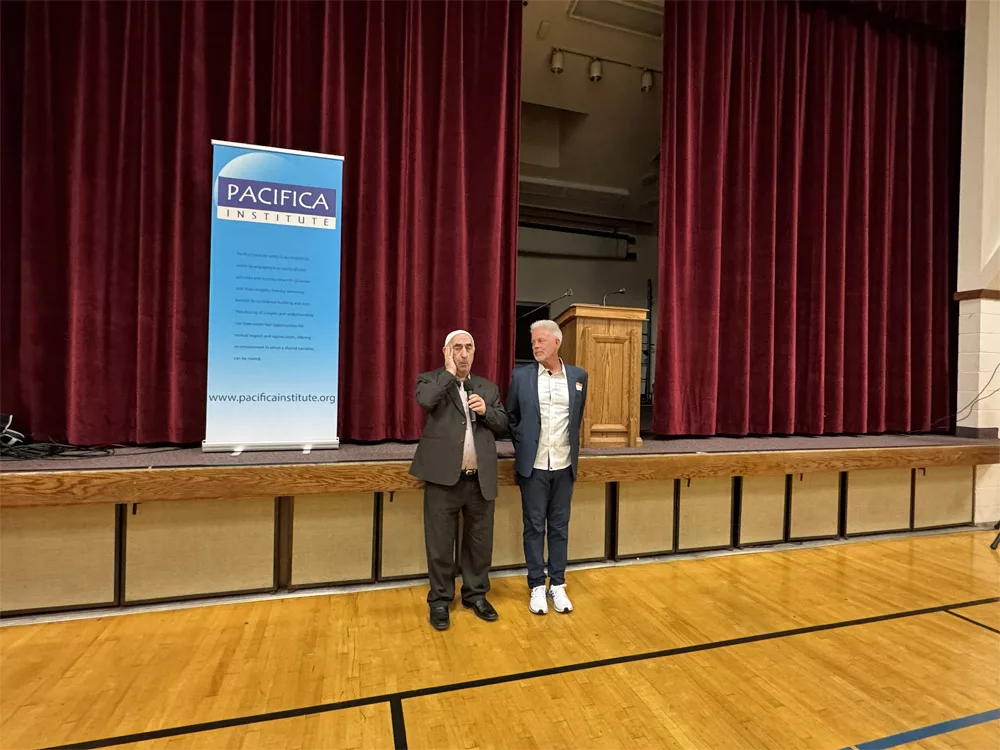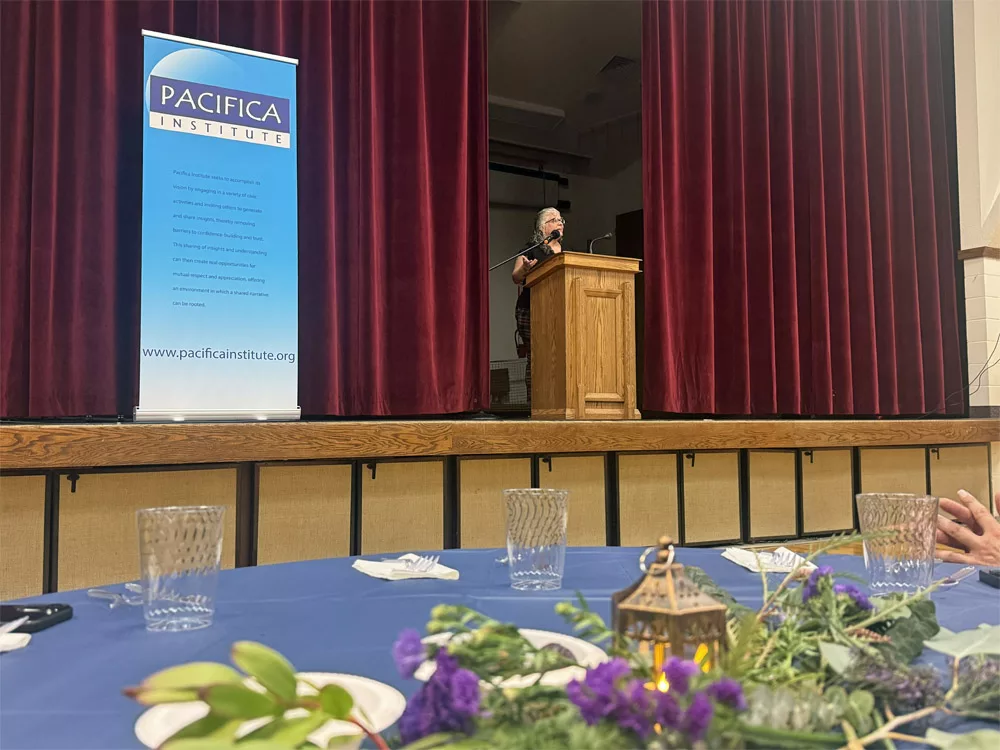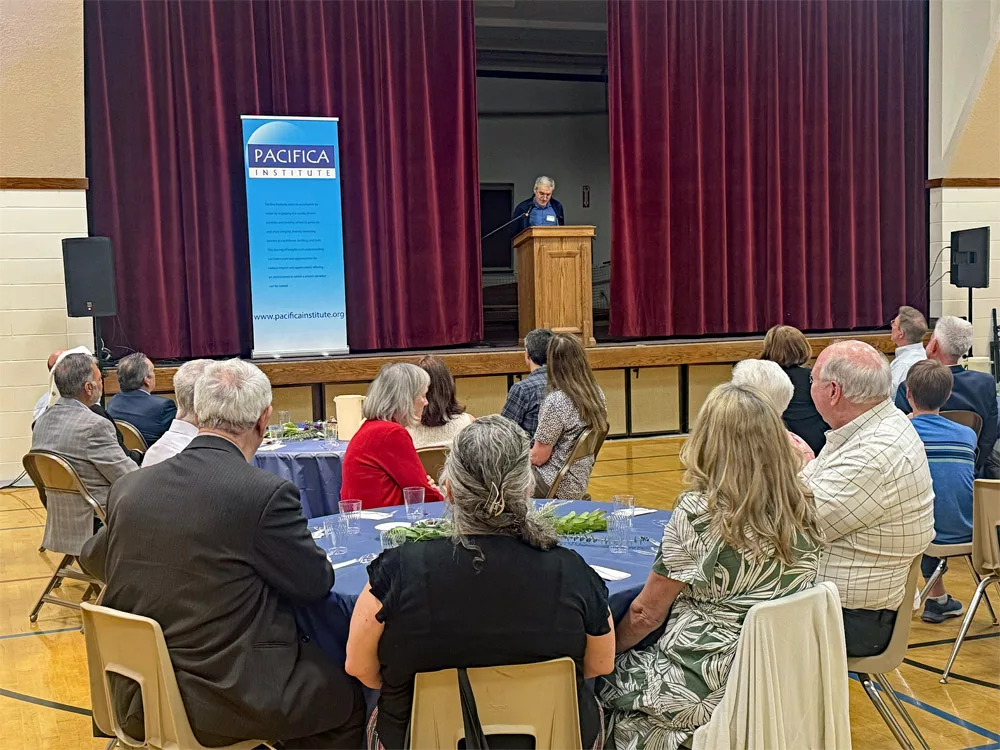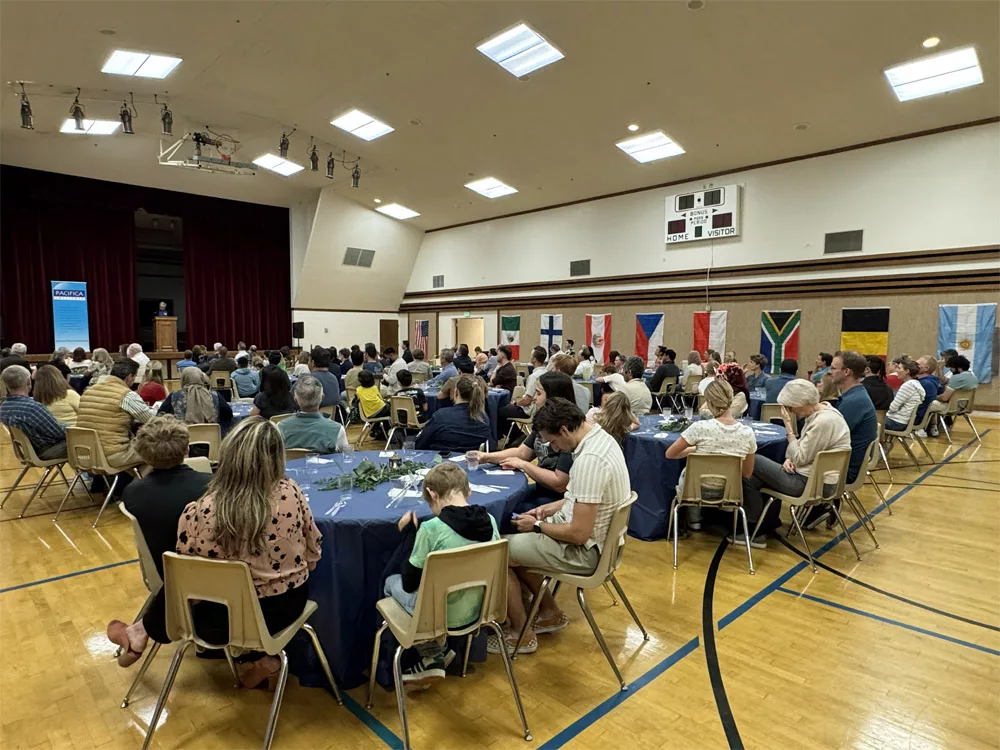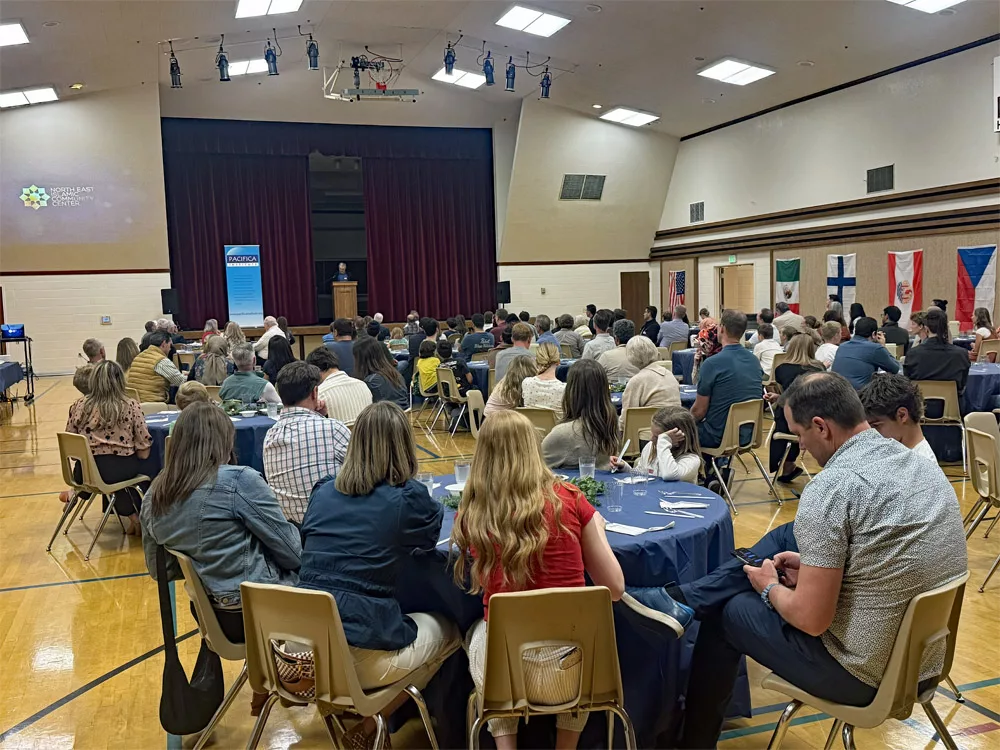
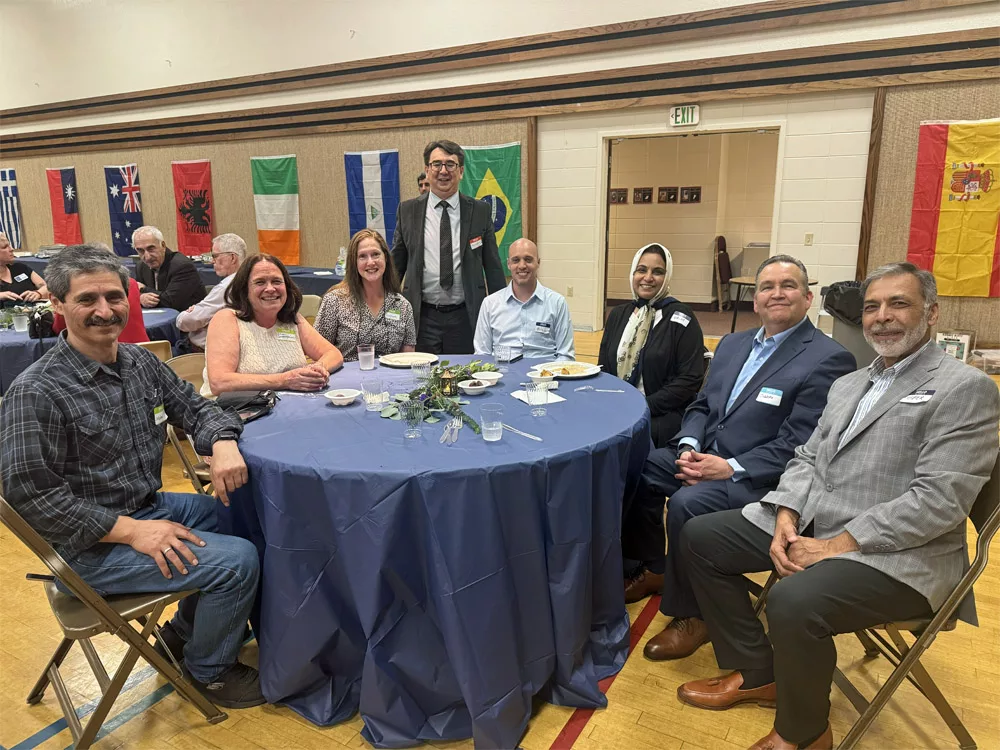
A Ramadan Interfaith Iftar Dinner held on March 14 brought together members of diverse faith communities in Danville for an evening of dialogue, learning, and shared reflection during the holy month of Ramadan. Although this was the first iftar gathering organized among these communities, the event became a meaningful and successful step toward building lasting interfaith relationships.
Hosted at The Church of Jesus Christ of Latter-day Saints in Danville and organized by Pacifica Institute and BAYCC (Bay Area Cultural Connections) in collaboration with the host community, the event welcomed participants from Muslim and Christian communities, along with interfaith partners, creating a warm and inclusive environment centered on connection, hospitality, and mutual understanding.
The gathering emphasized shared values such as service, compassion, and cooperation, reflecting a sincere effort to create space for people of different faith traditions to meet one another, build relationships, and strengthen the spirit of interfaith dialogue through a shared Ramadan experience.
The evening began with a welcome by Jenna Murray, who emphasized the importance of intentional interfaith engagement. She encouraged participants to sit together across faith lines, ensuring that members of The Church of Jesus Christ of Latter-day Saints and Muslim community members were present at each table. She noted that the gathering was an opportunity to learn from one another, deepen understanding, and recognize shared values, including serving others, love for all, and appreciation for the beauty of the world.
An opening prayer was offered by Kraig Hall of The Church of Jesus Christ of Latter-day Saints, who addressed the gathering as “an interfaith congregation” and expressed gratitude for the opportunity to come together. He reflected on shared values and common spiritual heritage, including “our common ancestry, even the great Prophet Abraham,” and offered a special blessing for those observing Ramadan, praying that God would “accept their sacrifices and bless their faithfulness.” He concluded with a prayer for unity, compassion, and a deeper sense of divine love among all present.
Will Champagne of The Church of Jesus Christ of Latter-day Saints reflected on shared values and opportunities for collaboration across faith traditions. He expressed appreciation for those observing Ramadan, noting, “I’m very impressed with your commitment and devotion and sacrifice.” Emphasizing a common purpose, he stated that “every soul in this room, were placed on this earth to be a blessing to other people,” and highlighted that communities often have more in common than they might assume.
He outlined three key shared values: caring for the poor, service to the community, and strengthening families. Underscoring compassion as a core principle, he noted, “Both our traditions teach that true religions, religion is measured by how we treat others.” He encouraged practical collaboration through service initiatives and community engagement, concluding that despite differences, “our faith call us to live the same kind of life, a life of compassion, service and unity.”
Abdullah Ficici of Pacifica Institute reflected on the shared spiritual heritage and deeper meaning of interfaith hospitality, framing the gathering as part of a long-standing tradition of openness and welcome. He described the evening through the concept of the “Table of Abraham,” emphasizing a space where all are received with dignity and friendship. Highlighting the spirit of the gathering, he noted that “we are all guests at that same table of friendship,” underscoring the importance of coming together across faith traditions.
He further reflected on historical examples of coexistence and mutual respect, pointing to moments where different faith communities supported one another in times of need. Through these reflections, he emphasized that interfaith engagement is not a new idea, but one deeply rooted in shared history and values. He also introduced the vision of the Hizmet Movement, explaining its focus on service, education, dialogue, and humanitarian engagement, and its commitment to fostering peaceful coexistence through active contribution to society.
Ficici emphasized that building a more compassionate world requires a proactive approach, where communities intentionally seek connection and partnership rather than waiting for it. He highlighted the importance of recognizing the dignity of every individual and working together toward common goals that benefit society as a whole. Concluding his remarks, he called for unity, compassion, and collective responsibility, encouraging participants to strengthen bonds of friendship and shared purpose, and leaving the audience with the message of Yunus Emre, a Sufi Poet, “Let us love, and let us be loved.”
DeEtte Jones of The Church of Jesus Christ of Latter-day Saints reflected on the spiritual significance of the gathering, emphasizing the shared purpose of faith and compassion. She described the evening as a moment that calls people to remember both their beliefs and their responsibility toward others, noting that “There’s something very beautiful about a gathering like this.” She expressed appreciation for the example set by Muslim communities during Ramadan, highlighting how they embody service and care across traditions and inspire others through their actions.
She emphasized that faith is not passive but active, explaining that it moves outward into service, mercy, and care for others. Framing a central question for all present, she asked, “How can we relieve suffering and increase the feeling and presence of God’s love?” and encouraged communities to move beyond differences by focusing on shared responsibility, adding that meaningful collaboration begins when people ask, “Will we stand together for what is right?”
Karen Hernandez, Executive Director of the Interfaith Council of Contra Costa County, emphasized that interfaith dialogue is most effective when it is rooted in genuine human connection. Drawing from her experience working in India and with the United Nations, she highlighted the importance of building trust through direct engagement and shared experiences.
Reflecting on the evening, she described the gathering as a meaningful example of people coming together to meet and interact, and encouraged the continuation of such efforts by suggesting that more events like this be organized to sustain and strengthen interfaith relationships.
The evening concluded with a shared iftar meal, bringing participants together across faith traditions in a spirit of hospitality and connection. As attendees engaged in conversation and reflection, the gathering demonstrated that even a first-time event can create meaningful impact, strengthening relationships and laying the foundation for continued interfaith collaboration.